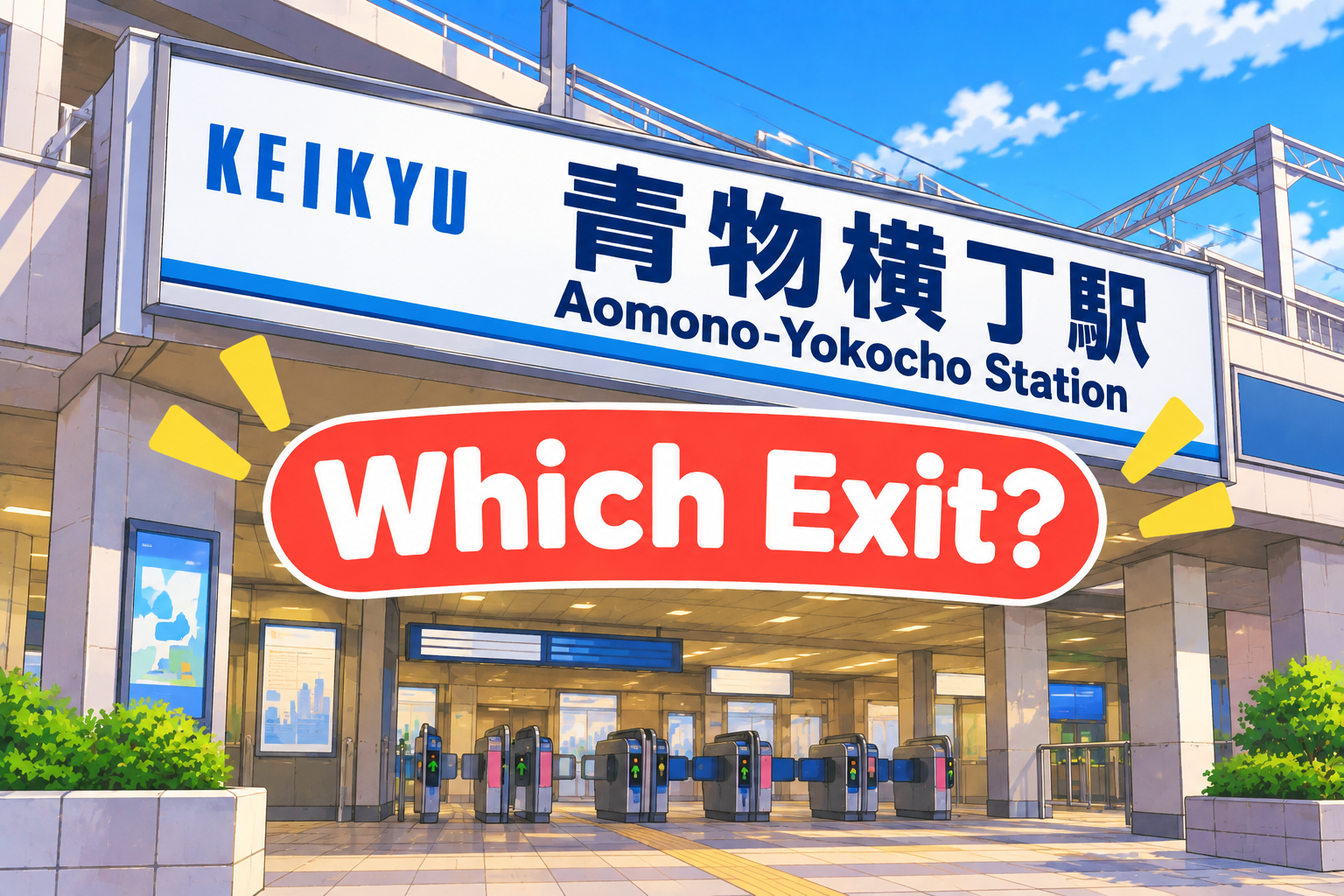
Arrived at Aomono-Yokocho Station in Tokyo and not sure which exit to use?
This Keikyu station has a Main Exit, East Exit, and West Exit. Although the station is relatively small, choosing the right exit can make it easier to reach nearby hotels, shopping streets, temples, and Shinagawa Seaside.
The good news is that Aomono-Yokocho Station has just one ticket gate area.
You only need to choose the right way out after passing through the ticket gates.
- Quick Answer: Which Exit Should You Use?
- Which Railway Line Serves Aomono-Yokocho Station?
- Main Exit: Shopping Street and Local Attractions
- East Exit: Temples and Shopping
- West Exit: Hotels and Elevator Access
- How to Get to Shinagawa Seaside Station
- Going to Aeon Style Shinagawa Seaside
- Traveling With Luggage, a Stroller, or a Wheelchair
- Common Mistakes at Aomono-Yokocho Station
- Quick Summary
- Official Information
- Related Guides
- Information Note
Quick Answer: Which Exit Should You Use?
| Destination | Recommended Exit |
|---|---|
| Aomono Yokocho Shopping Street | Main or East Exit |
| Honsenji Temple | Main or East Exit |
| Kaiunji Temple | East Exit |
| Toyoko Inn Shinagawa Aomono-Yokocho-eki | Main Exit; West Exit has elevator access |
| Sendaizaka area | West Exit / elevated walkway |
| Shinagawa Seaside Station | Main Exit, then walk east |
| Aeon Style Shinagawa Seaside | Main Exit, then walk east |
| Hotels near Shinagawa Seaside | Check the exact hotel address |
Important: The East Exit uses stairs. If you need an elevator to reach street level, check the West Exit route.
Which Railway Line Serves Aomono-Yokocho Station?
Aomono-Yokocho Station (青物横丁駅, KK04) is served by the Keikyu Main Line.
It is located between:
- Shimbamba Station (KK03)
- Samezu Station (KK05)
The Keikyu Line connects this area with Shinagawa and destinations farther south, including Keikyu Kamata and Yokohama.
Some train services continue toward Haneda Airport, while others follow different routes.
Always check the destination and stopping pattern before boarding.
There is no JR, Tokyo Metro, or Toei Subway station at Aomono-Yokocho.
Main Exit: Shopping Street and Local Attractions
The Main Exit (正面出口) is a convenient choice for visiting the shopping streets and many nearby destinations.
Use this exit for:
- Aomono Yokocho Shopping Street
- Honsenji Temple
- Kaiunji Temple area
- Local restaurants and shops
- Walking toward Shinagawa Seaside
Aomono Yokocho Shopping Street
Aomono Yokocho is a local shopping district with restaurants, shops, and everyday services.
The area is known locally as Aoyoko.
Unlike Tokyo’s major tourist shopping streets, this neighborhood has a more everyday atmosphere.
After leaving the station, check the signs and street map for the specific business you want to visit.
The shopping district extends beyond a single street, so different entrances may be convenient depending on your destination.
You can explore the area on the Aomono Yokocho Shopping Street official website.
East Exit: Temples and Shopping
The East Exit (東出口) is another convenient way to reach the eastern side of the neighborhood.
Use this exit for:
- Kaiunji Temple
- Honsenji Temple
- Aomono Yokocho Shopping Street
- Nearby local shops
- Eastern Minami-Shinagawa
The East Exit has stairs.
Visiting Honsenji Temple
Honsenji Temple (品川寺) is a historic Buddhist temple near the station.
According to its official website, it is approximately five minutes on foot from Aomono-Yokocho Station.
If you are visiting Honsenji, follow the local street signs or check the route from the station before walking.
Visiting Kaiunji Temple
Kaiunji Temple (海雲寺) is another historic temple close to Aomono-Yokocho Station.
It is particularly convenient from the East Exit.
Be careful not to confuse Kaiunji with Honsenji. They are two different temples in the same neighborhood.
West Exit: Hotels and Elevator Access
The West Exit (西出口) is useful for destinations on the western side of the station.
This includes:
- Toyoko Inn Shinagawa Aomono-Yokocho-eki
- Western Minami-Shinagawa
- The Sendaizaka area
- Nearby residential streets
There are different ways to reach the western side, including stairs and elevator access.
Going to Toyoko Inn Shinagawa Aomono-Yokocho-eki
This hotel is immediately beside the station.
According to the hotel’s official directions:
- Leave the station ticket gates.
- Continue straight toward the stairs directly in front of you.
- Go down the stairs.
- Walk a short distance and turn around the wall on your left.
- Look for the hotel entrance.
A police box across the road is a useful landmark.
If you need an elevator instead of the stairs, check the station’s accessible West Exit route.
The hotel is very close to the station, but be sure to look for the entrance rather than assuming the entire building faces the main road.
How to Get to Shinagawa Seaside Station
This is an important point for travelers.
Aomono-Yokocho Station and Shinagawa Seaside Station are not directly connected underground.
Aomono-Yokocho is on the Keikyu Main Line.
Shinagawa Seaside is on the Rinkai Line.
If you need to transfer between these stations on foot, you must leave the station and walk through the neighborhood.
Allow approximately 10 minutes for the walk, depending on your route and luggage.
From Aomono-Yokocho, the Main Exit is a practical starting point for walking toward Shinagawa Seaside.
Once you reach Shinagawa Seaside Station, check the Rinkai Line entrance signs before going underground.
If you are traveling in the opposite direction, the Rinkai Line’s official station information lists Exit C toward the Keikyu Aomono-Yokocho area.
Going to Aeon Style Shinagawa Seaside
Aeon Style Shinagawa Seaside is a large shopping facility near Shinagawa Seaside Station.
It is located separately from Aomono-Yokocho Station.
From Aomono-Yokocho, allow approximately 8–12 minutes on foot, depending on the walking route.
Follow the streets toward the Shinagawa Seaside area and check the shopping center’s entrance location.
If you are arriving on the Rinkai Line instead, Shinagawa Seaside Station is usually the more convenient station for Aeon.
Traveling With Luggage, a Stroller, or a Wheelchair
Aomono-Yokocho Station has elevators and escalators.
The railway platforms are elevated above street level.
According to Keikyu’s official station information, elevator access is available.
If you need an accessible route:
- Follow the elevator signs inside the station.
- Use the appropriate street-level elevator exit.
- Avoid choosing the East Exit stairs if you cannot use steps.
- Check the latest station map for your specific route.
- Ask station staff if you need assistance.
Remember that a route suitable for walking may not be suitable for a wheelchair or large suitcase.
Common Mistakes at Aomono-Yokocho Station
Mistake 1: Confusing Aomono-Yokocho With Shinagawa Seaside
These stations are on different railway lines.
There is no shared ticket gate or underground transfer passage between them.
Mistake 2: Choosing the East Exit With Heavy Luggage
The East Exit involves stairs.
Check the accessible West Exit route if you need an elevator.
Mistake 3: Looking for JR Platforms
Aomono-Yokocho is a Keikyu station, not a JR station.
If you need JR services, check your onward route through a suitable transfer station.
Mistake 4: Assuming Every Keikyu Train Goes to Haneda Airport
Train destinations and stopping patterns vary.
Check the departure display before boarding.
Mistake 5: Confusing the Nearby Temples
Kaiunji and Honsenji are separate temples.
Check the name of your destination before leaving the station.
Quick Summary
Remember these simple points:
- Main Exit: Local shopping streets, temples, and the direction of Shinagawa Seaside.
- East Exit: Kaiunji, Honsenji area, and nearby shops; stairs are required.
- West Exit: Nearby hotels and western streets, with an elevator route available.
- Shinagawa Seaside: A separate Rinkai Line station, approximately 10 minutes away on foot.
- Haneda Airport: Check your train’s destination and stopping pattern.
Aomono-Yokocho is smaller than Tokyo’s major railway stations, but checking your exit before leaving can still save time.
Official Information
- Keikyu – Aomono-Yokocho Station and Station Map (Japanese)
- Aomono Yokocho Shopping Street – Official Website (English)
- Aomono Yokocho Shopping Street – Access (English)
- Toyoko Inn Shinagawa Aomono-Yokocho-eki – Access (Japanese)
- Honsenji Temple – Official Access (Japanese)
- Rinkai Line – Shinagawa Seaside Station (Japanese)
- Aeon Style Shinagawa Seaside – Official Store Information (Japanese)
Related Guides
Information Note
This article is based on railway, hotel, shopping district, and facility information available as of October 2026.
Station exits, elevator availability, train services, business locations, and walking routes may change.
Always check the latest official station signs and information before traveling.