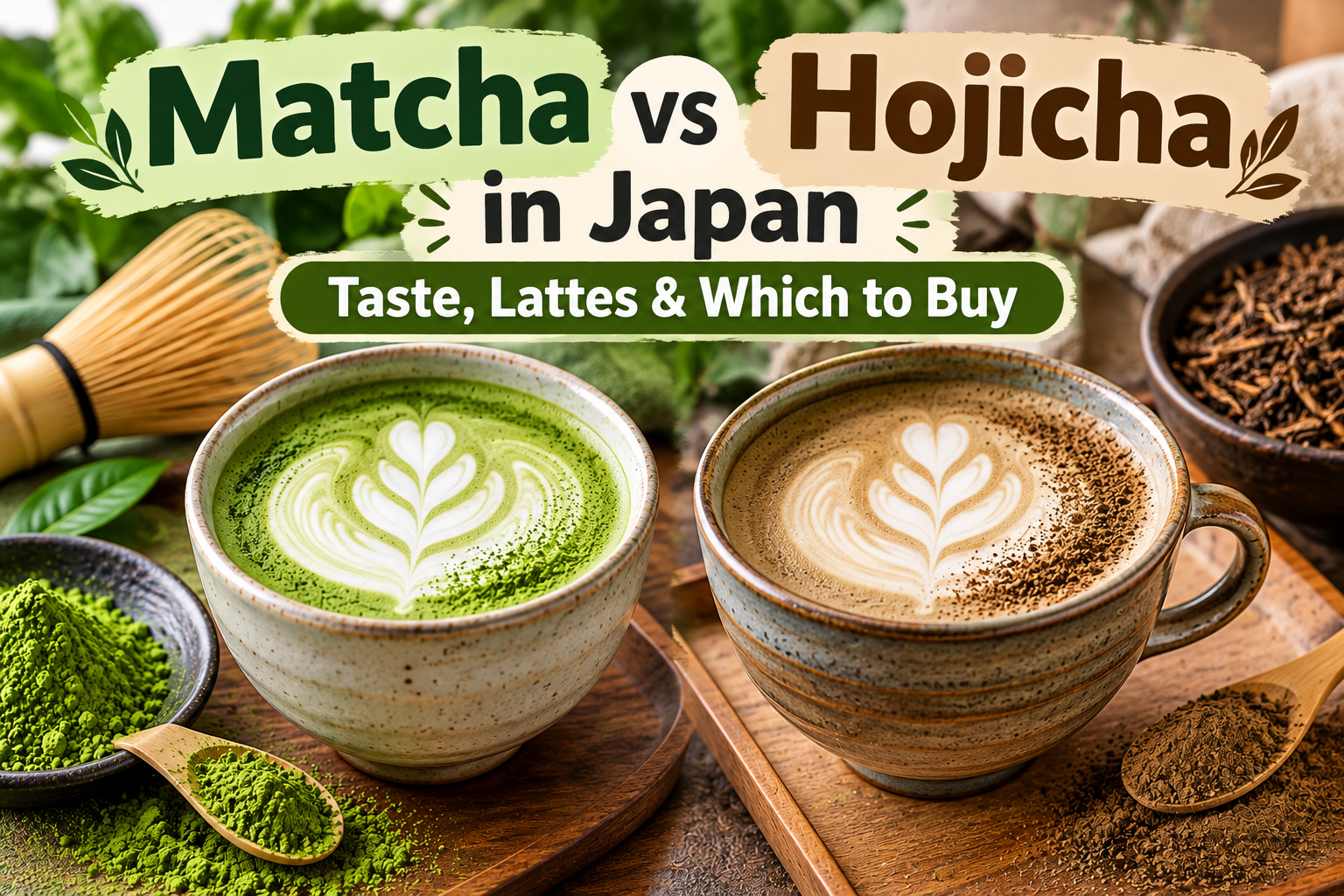
- Matcha or Hojicha: Which Japanese Tea Should You Try?
- Matcha vs Hojicha: Quick Comparison
- 1. What’s the Difference Between Matcha and Hojicha?
- 2. What Does Matcha Taste Like?
- 3. What Does Hojicha Taste Like?
- 4. Matcha Latte vs Hojicha Latte: Which Is Better?
- 5. Do Matcha and Hojicha Contain Caffeine?
- 6. How to Make Matcha and Hojicha Lattes at Home
- 7. Where Can You Buy Matcha in Japan?
- 8. Where Can You Buy Hojicha Powder in Japan?
- 9. Which Is Cheaper: Matcha or Hojicha?
- 10. Useful Japanese Words When Shopping
- 11. Which Tea Should You Buy?
- Frequently Asked Questions
- Final Thoughts: Matcha or Hojicha?
- Official References
- Disclaimer
Matcha or Hojicha: Which Japanese Tea Should You Try?
You’re shopping in Japan when you notice two very different tea powders.
One is a beautiful green. The other is a warm, earthy brown.
Both are Japanese teas, and both can be used to make delicious lattes. But their flavors are surprisingly different.
Matcha has a distinctive green tea taste, while hojicha is known for its comforting roasted aroma.
So which one should you buy?
Whether you’re visiting Japan, living here, or simply looking for a new tea to enjoy at home, this guide will help you understand the differences, choose the right product, and find out where to shop.
Matcha vs Hojicha: Quick Comparison
| Feature | Matcha | Hojicha |
|---|---|---|
| Japanese name | 抹茶 | ほうじ茶 |
| Color | Bright to deep green | Golden to dark brown |
| Flavor | Umami, vegetal, sometimes bitter | Toasty, roasted, mellow |
| Aroma | Fresh, leafy | Nutty, roasted |
| Production | Finely ground tencha | Roasted Japanese green tea |
| Traditional preparation | Whisked with water | Brewed from tea leaves |
| Latte flavor | Rich green tea taste | Creamy roasted-tea taste |
| Caffeine | Contains caffeine | Contains caffeine |
These are general characteristics. The actual flavor depends on the tea variety, processing, quality, and preparation.
1. What’s the Difference Between Matcha and Hojicha?
Both matcha and hojicha come from the tea plant, Camellia sinensis.
The major difference is how the tea leaves are processed.
Matcha: Green Tea Ground Into a Fine Powder
Traditional Japanese matcha is made from a type of tea called tencha.
The tea plants are shaded before harvesting. The leaves are then steamed, dried without rolling, processed, and finely ground.
This produces the green powder used in traditional Japanese tea preparation.
Matcha is appreciated for its combination of green tea aroma, umami, and varying degrees of sweetness and bitterness.
When you drink matcha prepared with water, you consume the finely ground tea leaves rather than only an infusion.
Hojicha: Green Tea With a Roasted Aroma
Hojicha is made by roasting Japanese green tea, often using leaves or stems from teas such as sencha or bancha.
Roasting changes the color of the tea and creates its characteristic toasted aroma.
Regular hojicha is usually sold as loose tea leaves or tea bags.
However, finely ground hojicha powder is also available, especially for making lattes, desserts, and other recipes.
The easiest way to remember the difference:
Matcha is known for its green tea character.
Hojicha is known for its roasted character.
2. What Does Matcha Taste Like?
Matcha has a flavor that can be difficult to describe if you’ve never tried Japanese powdered tea.
Depending on the product, you may notice:
- A fresh, leafy aroma
- A savory umami taste
- Natural sweetness
- Slight bitterness
- A smooth, rich texture when prepared well
Some matcha powders have a delicate flavor, while others taste stronger and more bitter.
More expensive matcha may offer a refined balance of flavors, but price alone doesn’t determine whether you’ll enjoy it.
Is Affordable Matcha Worth Trying?
Absolutely.
If you’re making matcha lattes at home, you don’t necessarily need an expensive tea from a specialty shop.
Milk can soften the bitterness and change how the tea’s flavors come through.
An affordable matcha may work very well for your favorite latte recipe.
However, different powders produce different results, so choosing the cheapest one isn’t always the best approach.
3. What Does Hojicha Taste Like?
Hojicha offers a very different tea experience.
Instead of matcha’s fresh, green flavor, hojicha is known for its roasted aroma.
Depending on the tea and roasting process, you may notice:
- Toasted or nutty flavors
- A warm, mellow aroma
- Gentle sweetness
- Notes reminiscent of caramel or roasted grains
- Relatively mild bitterness
Some hojicha has a light, delicate flavor.
Other varieties have a deeper, stronger roasted taste.
Is Hojicha Easier to Drink Than Matcha?
That depends on your preferences.
If you find matcha too grassy or bitter, hojicha may be worth trying.
Its roasted character can be appealing to people who enjoy toasted flavors.
But hojicha isn’t automatically better or sweeter.
Both teas have their own personalities, and trying them side by side is a good way to discover your preference.
4. Matcha Latte vs Hojicha Latte: Which Is Better?
This is where the comparison becomes especially interesting.
Both teas can be combined with milk, but the resulting drinks taste quite different.
Matcha Latte: Green, Creamy and Distinctive
A matcha latte combines matcha powder with milk.
It has a recognizable green tea flavor, with a creamy texture from the milk.
Depending on the matcha powder and recipe, the drink may be slightly bitter, rich in umami, or pleasantly mild.
A matcha latte may suit you if you:
- Enjoy green tea flavors
- Like a noticeable tea taste
- Want to experiment with different matcha powders
- Enjoy drinks that aren’t necessarily sweet
Hojicha Latte: Toasty, Smooth and Comforting
A hojicha latte combines roasted tea with milk.
Instead of a green tea aroma, it offers a warm, toasted character.
Its roasted flavors can pair particularly well with milk.
A hojicha latte may suit you if you:
- Enjoy nutty or roasted flavors
- Prefer a mellow tea character
- Want something different from matcha
- Enjoy experimenting with warm or iced milk drinks
Which One Would We Recommend?
Choose matcha if you want to experience the distinctive flavor of powdered Japanese green tea.
Choose hojicha if you’re curious about roasted tea flavors and want an alternative to matcha lattes.
If you’re unsure, try a small serving of each before buying a large package.
5. Do Matcha and Hojicha Contain Caffeine?
Yes. Both matcha and hojicha naturally contain caffeine.
The amount varies depending on the tea product and how it is prepared.
Hojicha is sometimes described as a low-caffeine tea, but it is not caffeine-free.
If you need to limit caffeine, check the product information rather than assuming all hojicha products are low in caffeine.
ITO EN – Does Hojicha Contain Caffeine? (Official Japanese FAQ)
6. How to Make Matcha and Hojicha Lattes at Home
Both drinks are simple to experiment with, especially if you have a suitable powder.
Easy Homemade Matcha Latte
Ingredients for one serving:
- 2g unsweetened matcha powder
- 30–40ml warm water
- 150–180ml milk
- Sweetener, optional
- Ice, optional
Instructions:
- Place the matcha powder in a small bowl or cup.
- Add the warm water.
- Whisk or stir until smooth.
- Pour the milk into a glass.
- Add the prepared matcha.
- Sweeten to taste.
For an iced version, add ice before combining the ingredients.
Start with a small amount of matcha, then adjust the strength to your preference.
Easy Homemade Hojicha Latte
Ingredients for one serving:
- Approximately 2–3g unsweetened hojicha powder suitable for drinks
- 30–40ml warm water
- 150–180ml milk
- Sweetener, optional
- Ice, optional
Instructions:
- Add the hojicha powder to a cup.
- Mix it with a small amount of warm water.
- Stir until evenly dispersed.
- Add warm or cold milk.
- Adjust the sweetness and roasted-tea strength.
Some hojicha powders are stronger than others. Follow the manufacturer’s recommended quantity when available.
The tea particles may not dissolve completely, and some settling is normal.
Can You Use Hojicha Tea Bags Instead?
Yes.
You can prepare a concentrated hojicha infusion and combine it with milk.
However, brewed hojicha and powdered hojicha produce different results.
Powdered hojicha often gives a more noticeable roasted-tea character in a milk-based drink, depending on the recipe.
7. Where Can You Buy Matcha in Japan?
You have several shopping options.
MUJI
MUJI sells Japanese tea products, including convenient matcha latte mixes.
These can be useful if you prefer a sweet, easy-to-prepare drink.
Remember that a latte mix is not necessarily pure matcha.
KALDI Coffee Farm
KALDI is another place worth checking.
Its product selection has included both matcha powder and matcha latte mixes.
If you want to control the sweetness yourself, look for an unsweetened product and check the ingredient list.
Seijo Ishii and Japanese Supermarkets
Some supermarkets carry matcha products in their tea, beverage, or baking sections.
Seijo Ishii is one retailer worth checking for specialty tea products.
However, store selection varies, and not every supermarket carries pure matcha powder.
Specialty Japanese Tea Shops
Traditional tea shops are useful when you want to compare different matcha varieties.
You may find products intended for:
- Traditional matcha preparation
- Everyday drinking
- Matcha lattes
- Cooking and baking
If you’re unfamiliar with the products, ask the staff which powder they recommend for your intended use.
Want Specific Product Names and Prices?
We’ve prepared a separate shopping guide comparing affordable matcha products from MUJI, KALDI, ITO EN, Morihan, and other Japanese brands.
Where to Buy Affordable Matcha in Japan: MUJI, KALDI & More
This guide includes product descriptions, reference prices, and official retailer links.
8. Where Can You Buy Hojicha Powder in Japan?
Hojicha tea bags and loose tea can be easier to find than finely ground hojicha powder intended for lattes.
If you’re planning to make homemade hojicha lattes, make sure you’re buying the right product.
Look for These Japanese Labels
- ほうじ茶パウダー — Hojicha powder
- 粉末ほうじ茶 — Powdered hojicha
- ほうじ茶ラテ — Hojicha latte
- 砂糖不使用 — No added sugar
Some products are pure roasted tea powder.
Others are instant latte mixes containing added sugar, milk ingredients, or other components.
Shopping in Tokyo?
Tokyo has Japanese tea specialists and department-store food sections where you can look for hojicha products.
For specific shopping suggestions, see:
Where to Buy Hojicha Powder in Tokyo
Shopping in Osaka?
Osaka also has Japanese tea retailers worth checking.
Our Osaka guide introduces shops and products to investigate when searching for hojicha powder suitable for homemade lattes.
Where to Buy Hojicha Powder in Osaka
Always confirm current stock before visiting a store specifically for one product.
9. Which Is Cheaper: Matcha or Hojicha?
There isn’t one simple answer.
Both teas are sold at a wide range of prices.
The price depends on the brand, quality, processing, package size, and retailer.
For example:
- Premium matcha from a specialty tea shop may cost considerably more than everyday matcha.
- Regular hojicha tea bags may be a relatively affordable option.
- Finely powdered hojicha intended for lattes may cost more than ordinary hojicha leaves.
- Instant latte mixes contain ingredients other than tea, so their prices aren’t directly comparable with pure tea powders.
A Better Way to Compare Prices
If you’re buying pure powder, compare the price per gram and the recommended amount for one drink.
For sweetened latte mixes, compare the number of servings rather than only the package weight.
A large bag of instant latte mix doesn’t necessarily contain more actual tea than a small bag of pure matcha or hojicha powder.
Japan Life Steps Tip: Before choosing the cheapest package, check whether you’re buying pure tea powder, an instant drink mix, or tea intended for brewing.
10. Useful Japanese Words When Shopping
Japanese packaging can be confusing, especially when several green or brown tea products look similar.
Here are some helpful terms.
| Japanese | English |
|---|---|
| 抹茶 | Matcha |
| ほうじ茶 | Hojicha |
| 抹茶パウダー | Matcha powder |
| ほうじ茶パウダー | Hojicha powder |
| 抹茶ラテ | Matcha latte |
| ほうじ茶ラテ | Hojicha latte |
| 無糖 | Unsweetened |
| 砂糖不使用 | No added sugar |
| 抹茶入り | Contains matcha |
| 原材料名 | Ingredients |
| 税込 | Tax included |
| 税抜 | Tax excluded |
A Useful Phrase for Buying Hojicha Powder
If you’re visiting a Japanese tea shop, you can ask:
ほうじ茶ラテ用の粉末はありますか?
Hojicha rate-yō no funmatsu wa arimasu ka?
“Do you have powder for making hojicha lattes?”
If you want to make sure the product is unsweetened, ask:
砂糖は入っていますか?
Satō wa haitte imasu ka?
“Does it contain sugar?”
These simple questions can help you avoid buying a product that isn’t suitable for your recipe.
11. Which Tea Should You Buy?
Still undecided? Here are a few practical suggestions.
If You Enjoy Traditional Japanese Green Tea
Start with matcha.
Its green tea aroma and umami-rich character make it a distinctive Japanese tea experience.
If You Prefer Roasted or Nutty Flavors
Try hojicha.
Its toasted aroma offers something very different from matcha.
If You’re Making a Latte Every Morning
Choose a powder that suits your preferred flavor and preparation method.
A convenient mixing product may be more practical than a premium tea intended for traditional preparation.
If You’re Buying a Japanese Souvenir
Both matcha and hojicha can make interesting gifts.
Consider choosing small packages with clear preparation instructions, especially if the recipient is unfamiliar with Japanese tea.
Check the import rules of your destination country before traveling.
Frequently Asked Questions
Is Hojicha a Type of Matcha?
No.
They are different Japanese tea products.
Matcha is traditionally made from finely ground tencha, while hojicha is made by roasting tea leaves or stems.
Is Hojicha Always Sweet?
No.
Hojicha has a roasted flavor that some people perceive as naturally mellow, but unsweetened hojicha is not the same as a sugary latte.
Sweetness depends on the tea and any additional ingredients.
Can I Make Both Lattes Without Sugar?
Yes.
Use unsweetened matcha or hojicha powder and add your preferred milk.
Check product labels carefully because some instant latte mixes already contain sugar.
Can I Use Ordinary Green Tea Powder Instead of Matcha?
You can use some other green tea powders in milk drinks, but the flavor may differ from traditional matcha.
Look for products clearly labeled 抹茶 if you specifically want matcha.
Is Hojicha the Same as Barley Tea?
No.
Hojicha is made from the tea plant.
Barley tea, called mugicha (麦茶), is made from roasted barley.
They are different drinks, even though both may have roasted aromas.
Final Thoughts: Matcha or Hojicha?
Matcha and hojicha are two different ways to enjoy Japanese tea.
Matcha offers a distinctive green tea taste, while hojicha brings warm, roasted flavors.
Neither is automatically better.
If you’re visiting Japan or shopping for tea to enjoy at home, try choosing based on how you want to drink it.
For a fresh green tea experience, consider matcha.
For a roasted, aromatic drink, consider hojicha.
And if you enjoy homemade lattes, there’s no reason you can’t try both.
The best Japanese tea is the one you enjoy drinking.
Official References
For more information about Japanese tea production and characteristics:
- Ministry of Agriculture, Forestry and Fisheries – Uji Tea (English)
- Ministry of Agriculture, Forestry and Fisheries – Types of Japanese Tea (Japanese)
- ITO EN – Does Hojicha Contain Caffeine? (Japanese)
Disclaimer
This article is an independent informational guide based on publicly available information reviewed in October 2026.
Flavor descriptions reflect general tea characteristics and are not based on independent taste testing of specific products. Taste, aroma, bitterness, sweetness, and texture vary by product, preparation method, and personal preference.
Caffeine content varies by tea variety, serving size, and preparation. This article does not provide medical advice. Individuals who need to restrict caffeine should check product information and consult a qualified healthcare professional where appropriate.
Prices, ingredients, retailer selections, product availability, and store information may change without notice. Always verify current product information and follow manufacturer preparation instructions.
Japan Life Steps is an independent informational website and is not affiliated with, sponsored by, or endorsed by any manufacturers, retailers, or organizations mentioned. External links are provided for reference and convenience.